Exploring Microsoft Forms

Introduction:

In this blog, I will be attempting to explore Microsoft Forms completely.

Pre-requisites:

Microsoft Office 365
Microsoft Forms

Demonstration:

1. Navigating to Microsoft Forms Pro:
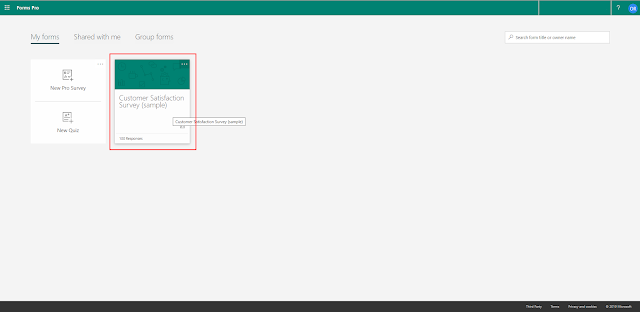
Go tohttps://portal.office.com and click on Forms in the Listed Apps

2. Template:

List of Templates to Create a Form
Templates are a ready-made format for the forms. You can make additions or deletions as per your requirement.

3. Creation of New Form:
Creation of Forms includes making a form with the respective title, description, theme, and a logo.
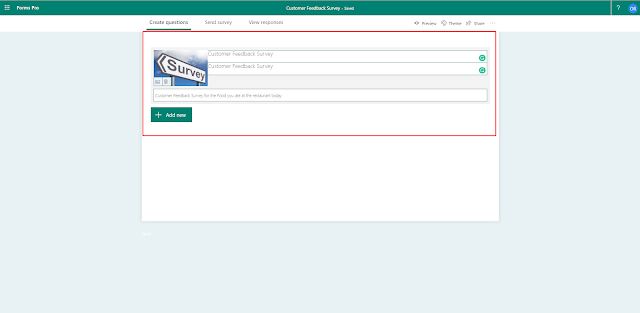
Create a Form

Adding questions to Microsoft Forms:
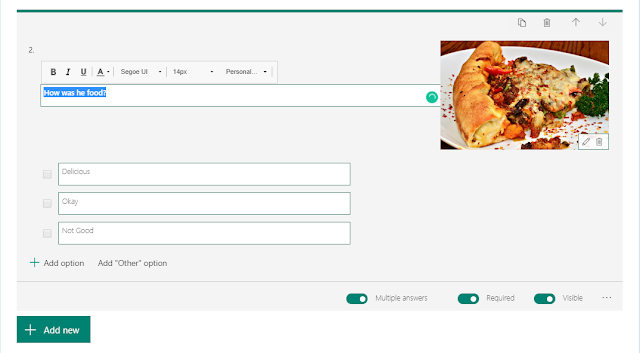
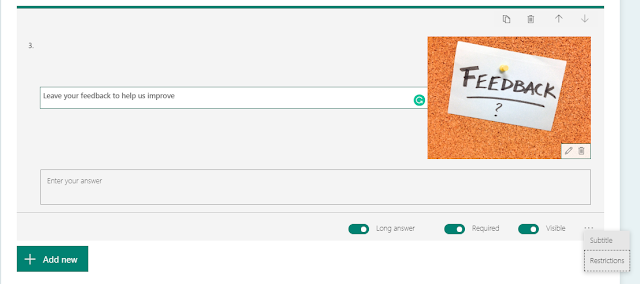
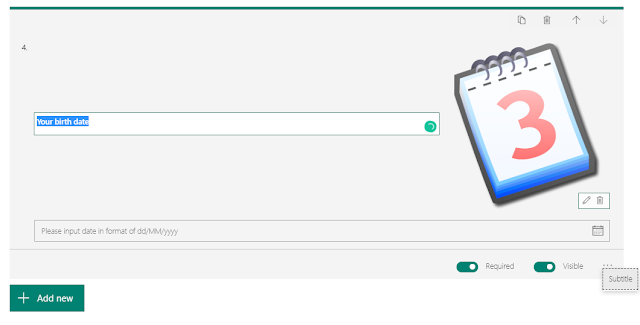
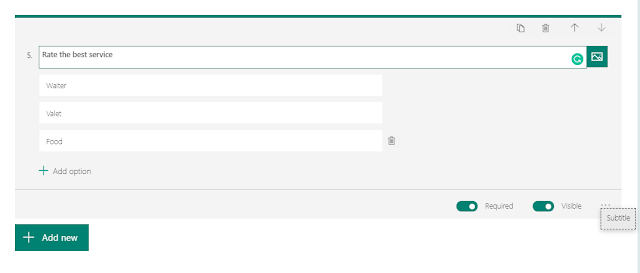
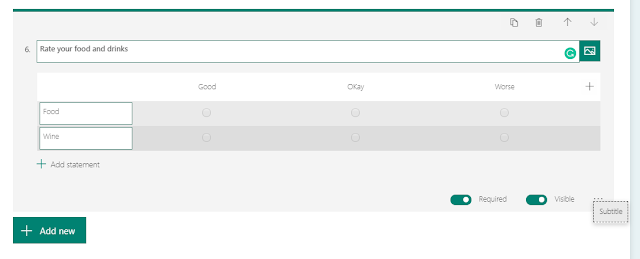
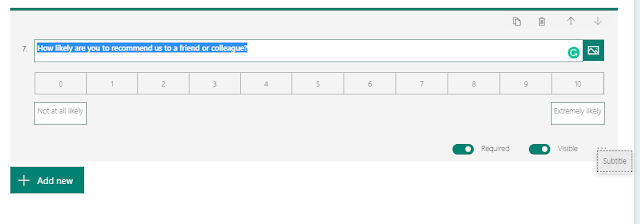
Adding questions can be of different types. It can also include all the validations, making questions mandatory and set-up a subtitle for the question in case more information is needed on it. Also, each question can have an image to convey the overall gist of the question.
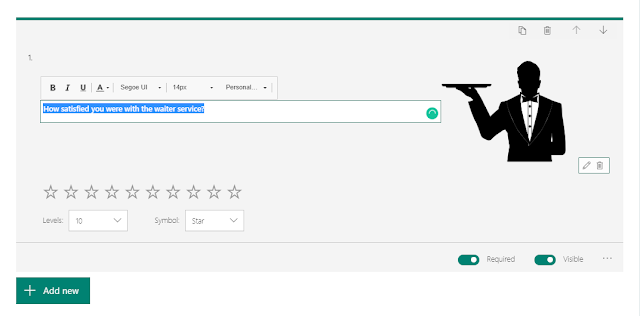
Adding Rating based questions
Adding Choice-based questions
Adding Text-based questions

Adding Date based questions
Adding Rank based questions


Adding a multiple Rate based question
Adding a Whole Number rating based question


4. Sharing Link:
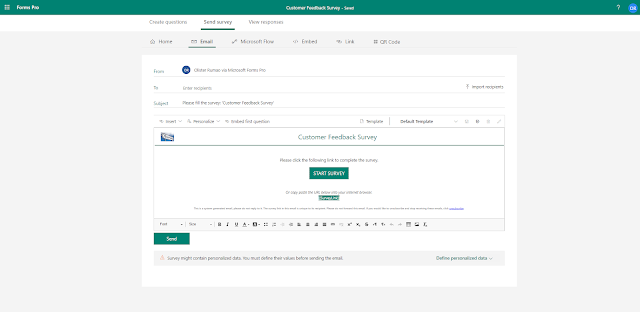
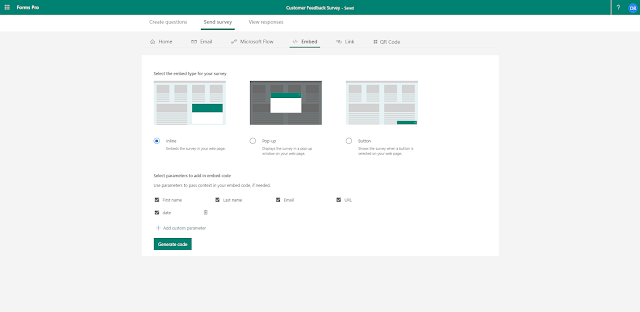
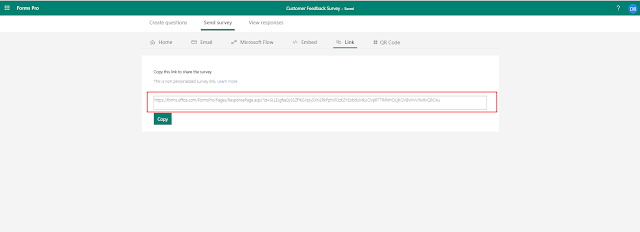
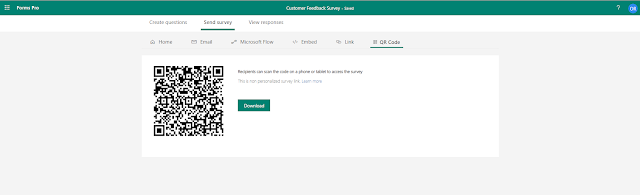
Sharing a form can be a very easy task. A form can be shared through an Email, Microsoft Flow, Link Sharing and QR Code generation.
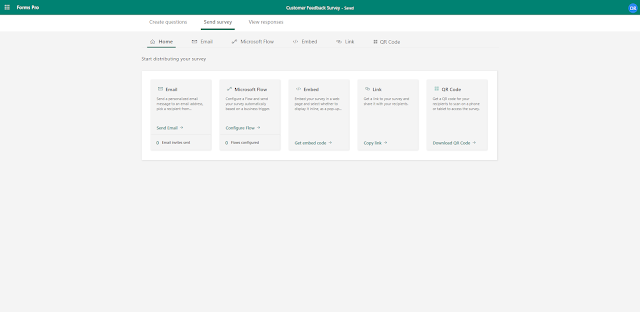
Sharing the Forms Link

Sharing the Form Link through Email
Sharing Form Link by Embedding in your Website


Creating a Link for the Form
Creating a QR Code for the Form


5. Getting Responses:
Here you find a list of responses which becomes available after your Survey, the form has been answered.

Conclusion:

Microsoft Forms is a versatile tool to be used wherever data entry is required. It is relatively simple and easy for anyone to use it

Comments

Popular posts from this blog

How to resolve 'Edit in Excel' issues

  Introduction: As you know that D365 BC offers Edit in Excel functionality. But manipulating or customizing such a  standard functionality is difficult as there is not much control available. Hence, solving issues is also a difficult task. I will be resolving the issue for this specific issue, however, the debugging steps are similar. Pre- requisites : ODATA V4 Connectivity tool for Webservices Microsoft Dynamics 365 Business Central Books & References: https://community.dynamics.com/business/f/dynamics-365-business-central-forum/448226/issue-with-excel-add-in/ Demonstration: The way Edit in Excel works is that for a given page a Webservice is created adding PageID and Page Name. Hence, there are some Webservice connectivity checks in place to validate. 1. Edit in Excel Custom Action on the page: If you are adding Edit in Excel Action on the page, please ensure that you are providing appropriate PageName and Filter criteria as Webservice is using these parameters Refer Ed...

Something went wrong. An Error occurred - Error Resolution

Introduction: With the installation of NAV 2018 or BC On-premise, I have observed that when creating New Server Instance and New WebServer Instance, you will get the error 'Something went wrong. An Error occurred '. I referred to the community questions below but didn't find my resolution. Hence, I decided to write this blog. Pre-requisites: Microsoft Dynamics Business Central - On-Premise / NAV 2018 Understanding of Business Central Authentication  Books & References: https://community.dynamics.com/nav/f/microsoft-dynamics-nav-forum/261301/nav-2018-web-client-an-error-has-occurred https://community.dynamics.com/business/f/dynamics-365-business-central-forum/421987/error-something-went-wrong-an-error-has-occurred-azure-ad-tenant Demonstration: 1. Creation of NAVServerInstance: In order to create NAVServerInstance, you can either add the Server Instance through Business Central Administration or Powershell command. Add Instance - Business Central Administration Add Insta...

How to Setup NavUserPassword with SSL for Microsoft Dynamics Business Central(NAVISION ERP)

Introduction: In this blog, I'm attempting to setup basic authentication like NavUserPassword for Business Central On-Premise. NavUserPassword is an authentication system, where each user have their own UserID and password which is configured inside Business Central itself. Pre- requisites : Microsoft Dynamics 365 Business Central On-Premise Domain for your VM Understanding of Credential Types in Business Central Demonstration: 1. Setup DNS in Azure VM: Go to your VM inside Azure to configure DNS. Click on Configure Put the URL as you need. 2.  Create a Webserver Instance for Business Central: New-NAVWebServerInstance to create a Web Server Instance Adding Web Server Instance with the name LS 3. Create a Self Signed Certificate or get an SSL from Domain provider: Run the PowerShell script to create a self signed certificate New Self-Signed Certificate New Self-Signed Certificate created After creation/installation of Certificate, righ...